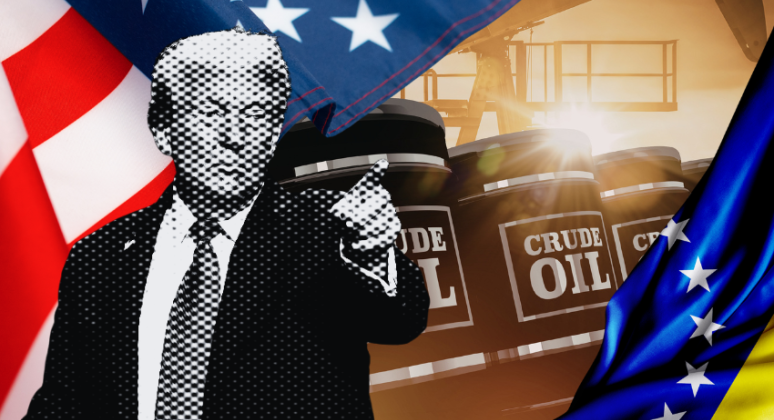
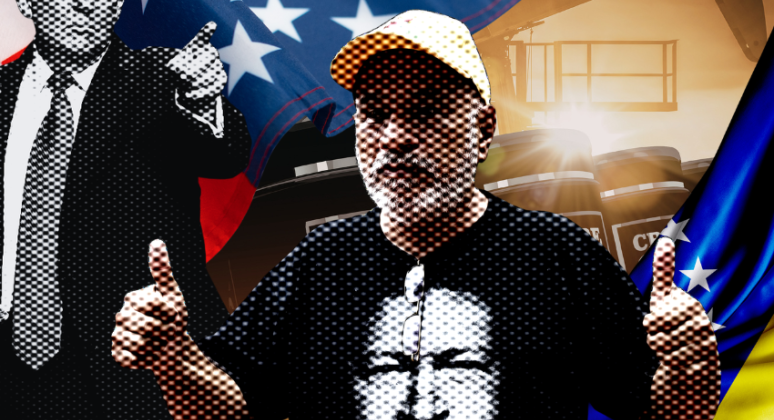
What was behind the January 3 US military assault on Venezuela? Was this simply to gain control of Venezuelan oil?
We are witnessing a realignment of spheres of influence on the international chessboard. In this context, US President Donald Trump has inaugurated a new way of doing politics, known as the “Donroe Doctrine”.
This Trumpist project seeks to reclaim Latin America as the US’s backyard and halt China’s rising regional influence.
The January 3 attack also sent a message to Latin American countries that this is a new phase of Trump-style interventionism, with quick and decisive actions seeking a deterrent effect.
With Venezuela, Trump was able to kill two birds with one stone: exert control in this sphere of influence and seize vast reserves of crude oil and minerals, including gold and heavily coveted rare earth elements such as rhodium and coltan.
The US has also gained a market of 30 million consumers for its products, which are now being purchased under colonial conditions.
So, there was an economic motivation as well as a geopolitical one.
As the highest stage of capitalism, imperialism requires imperial countries exerting power and control over their spheres of influence by converting periphery countries into areas of extraction or production while keeping out competitors.
This is occurring now in Venezuela.
What was the reaction within Venezuela to the events of January 3 and since? What is the mood of the population?
Most people felt a mix of relief and surprise. For more than 10 years, [President Nicolás] Maduro presided over a deep economic crisis and a strong repressive atmosphere. With all outlets for social discontent blocked, such feelings in the first few days [after January 3] were understandable.
These feelings have begun to dissipate, and I believe will continue to dissipate — even if January 3 is still very fresh in our minds — because many realise that the regime is still in power.
Moreover, they see that the US military incursion not only caused a loss of sovereignty but has imposed a protectorate.
People’s expectations remain focused on improving their economic situation. They are less interested in democracy or a political solution to the crisis. Essentially, they want better wages and salaries.
For now, the atmosphere on the street remains calm. People hope that things will improve in the short term.
It is somewhat paradoxical that people wonder when Trump will raise their salaries — which is both tragicomical and an insight into how people view our current situation.
Despite talk of regime change, power remains with Delcy Rodríguez and others in power with Maduro. Why do you think that was the result?
The Trump administration closely studied the implications of carrying out a regime change by force in Venezuela. That is why the military operation in the Caribbean took so many months.
Ultimately, Trump assessed that regime change would need a much larger intervention and cost more lives and resources.
Instead, he opted for maximum pressure and dialogue with certain sectors in power to facilitate the operation they ultimately carried out.
Within Chavismo, there is a sense of shock and divisions that could deepen. That is why Chavismo is now talking about resistance in a bid to connect with its supporters and convince them to accept surrendering everything to save what they call the “revolution”.
Delcy and [National Assembly President] Jorge Rodríguez hope this pragmatic, non-anti-imperialist and resistance-focused discourse will help galvanise their base. |